

Liu Ting, vice-president of Harbin Institute of Technology (HIT), led a delegation from April 20 to 23 to South Korea, where they conducted in-depth exchanges with the National Research Foundation of Korea (NRF), the Korea Advanced Institute of Science and Technology (KAIST), Hanyang University (ERICA campus and Seoul campus), the College of Engineering of Seoul National University, and LG Electronics' Eco Solution.
At NRF, Liu held discussions with NRF President Hong Won-hwa. The two sides exchanged views on collaboration in fundamental research between China and South Korea, alignment of national strategic research projects, and mutual learning in research funding mechanisms. They also explored opportunities for launching jointly funded programs. Liu noted that the National Natural Science Foundation of China (NSFC) and NRF have long maintained a sound cooperative relationship. He stated that HIT will leverage its strengths in science and engineering to proactively design and efficiently advance a number of collaborative projects, while actively participating in exchange and R&D activities under the NSFC–NRF joint funding framework.
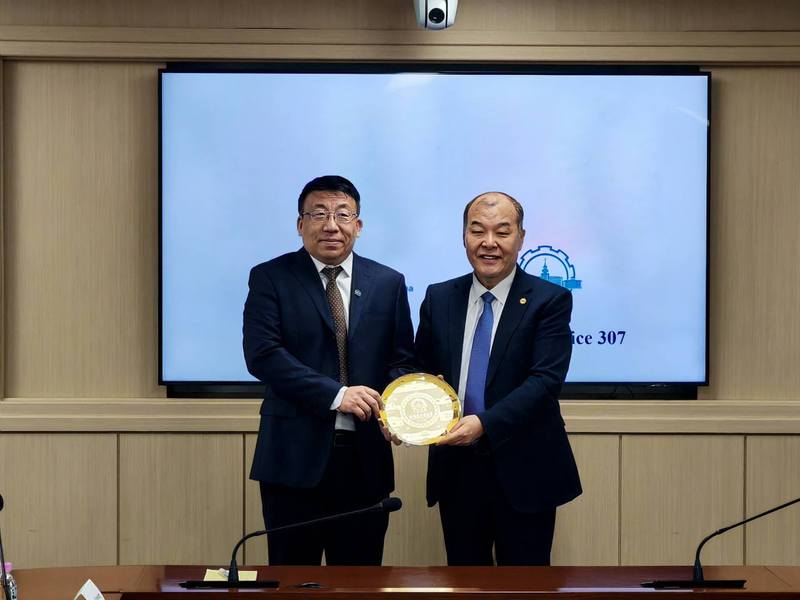
Liu Ting visits the National Research Foundation of Korea. [Photo/hit.edu.cn]
At KAIST, Liu and the delegation met with its vice-president, Kim So-young. Both sides reached consensus on deepening faculty exchanges, jointly establishing laboratories, and expanding cooperation in frontier areas such as robotics and artificial intelligence. They also agreed to further enlarge the scale of jointly trained doctoral students. The delegation visited the Biomechanics Laboratory, Cryogenic Engineering Laboratory, and Fusion and Plasma Dynamics Laboratory, where they learned in detail about the latest research progress in these fields. In addition, the delegation met with HIT student representatives participating in joint training programs or degree studies at KAIST.
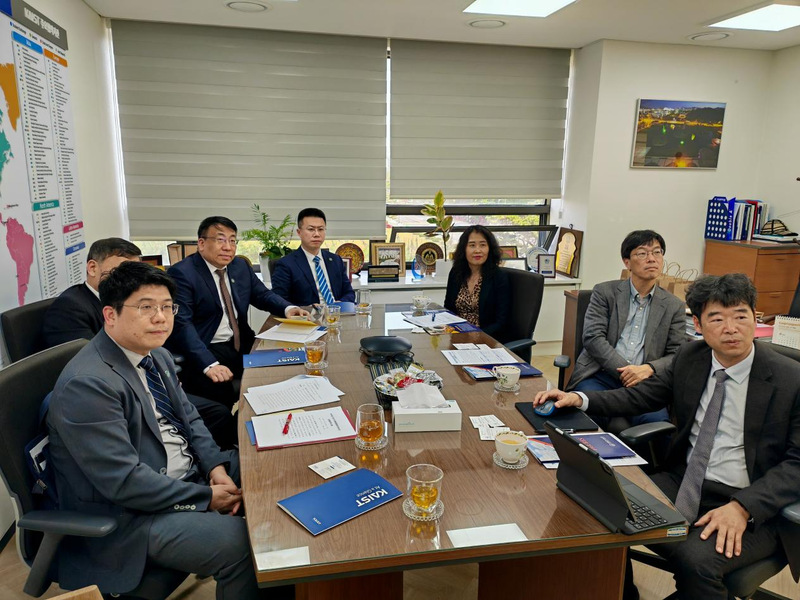
Liu Ting in talks with KAIST representatives. [Photo/hit.edu.cn]
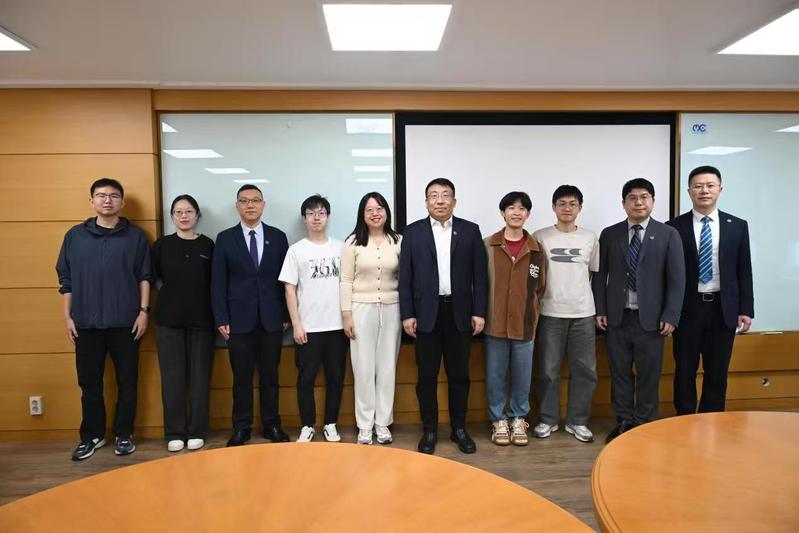
Liu Ting meets with HIT students studying at KAIST. [Photo/hit.edu.cn]
At Hanyang University, the delegation visited both the ERICA campus and the Seoul campus. Liu met with the university's president, Lee Ki-jeong. The two sides reviewed achievements in cooperative education programs and faculty exchanges, and reached new consensus on jointly establishing laboratories and expanding dual-degree programs. At the ERICA campus, the delegation focused on learning about the university's integrated model of industry–campus collaboration and its operational approach. At the Seoul campus, the delegation held in-depth discussions with Director of International Affairs Kim Han-sung on proposed cooperative education initiatives, and toured laboratories in materials science, environmental science, and related fields.
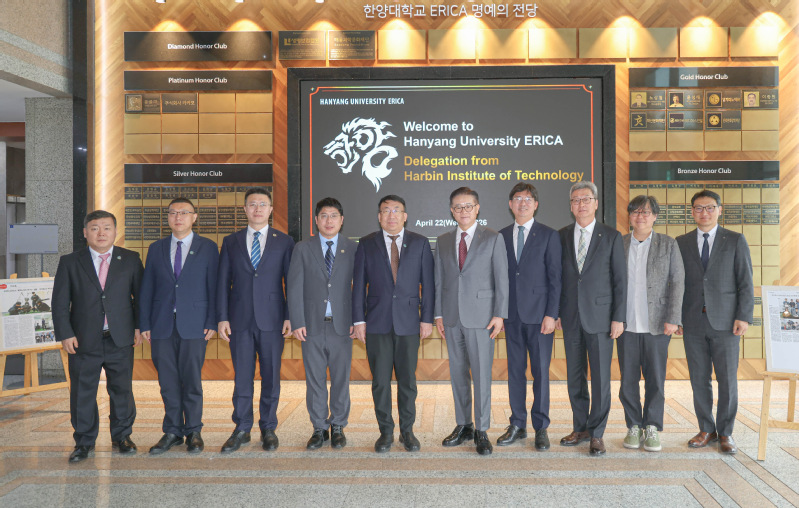
Liu Ting visits Hanyang University's ERICA campus. [Photo/hit.edu.cn]
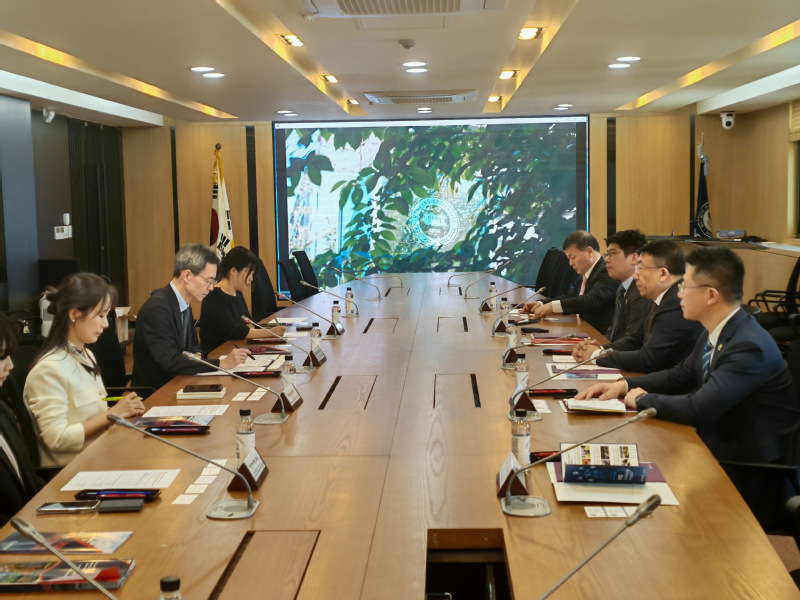
Liu Ting has a meeting at Hanyang University's Seoul campus. [Photo/hit.edu.cn]
At Seoul National University, Liu met with the dean of its College of Engineering, Kim Young-oh. The two sides conducted extensive discussions on practical cooperation in shared strength areas such as semiconductors, artificial intelligence, and mechanical engineering, including joint research, student exchanges, research internships, joint doctoral training, and the establishment of new scholarship programs. These exchanges laid a solid foundation for upgrading future cooperation to a university-level strategic partnership. The delegation also visited the Inter-University Semiconductor Research Center, where they toured advanced research facilities in semiconductor devices and processes, and learned about its integrated model combining research and teaching.
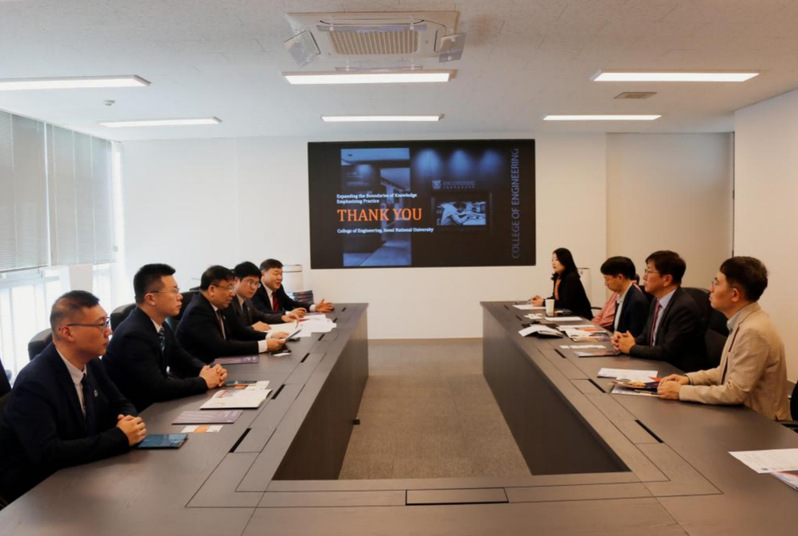
Liu Ting has a meeting at Seoul National University. [Photo/hit.edu.cn]
Liu also met with Lee Jae-sung, president of LG Electronics' Eco Solution, and other senior executives. Both sides reviewed the progress achieved since the establishment of the LG Chinese Consortium for Advanced Heat Pump Research (CCAHR) in August 2024, as well as the positive results of jointly building LG's third global cold-climate heat pump joint laboratory. Leveraging HIT's technological strengths in ultra-cold environment simulation, the two sides verified the stable heating performance of LG products in Mohe under the extreme low temperature of -37.3 C. During the meeting, Liu signed, on behalf of HIT, the Second-Year Cooperation Agreement of the CCAHR with LG. Both sides also reached consensus on jointly establishing a new laboratory.
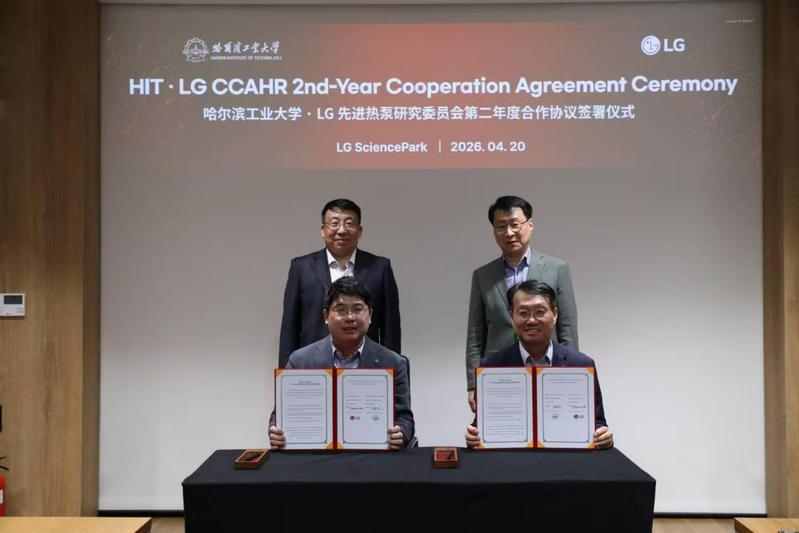
HIT signs an agreement with LG. [Photo/hit.edu.cn]