

A delegation from the School of Energy Science and Engineering of Harbin Institute of Technology (HIT) visited Razzakov Kyrgyz State Technical University (KSTU) in Kyrgyzstan and Nazarbayev University (NU) in Kazakhstan from July 4 to 10.
Through the China-SCO Doctoral Training Innovation Center platform, the delegation, led by Professor Guene Lougou Bachirou and Associate Researcher Wang Wei, included 10 doctoral students whose research areas covered renewable energy, hydrogen energy, solar thermal utilization, advanced power engineering, and sustainable energy systems.
The visits resulted in several strategic consensus items regarding the joint construction of a doctoral education center, the signing of a university-level cooperation memorandum, faculty and student exchanges, and applications for international research projects.
These efforts deepened practical cooperation in the energy sector among China, Kyrgyzstan and Kazakhstan, and promoted the construction of the China-SCO Doctoral Training Innovation Center platform.
The delegation visited KSTU from July 4 to 8 to conduct academic exchange activities focusing on talent cultivation, scientific research cooperation, and international exchange.
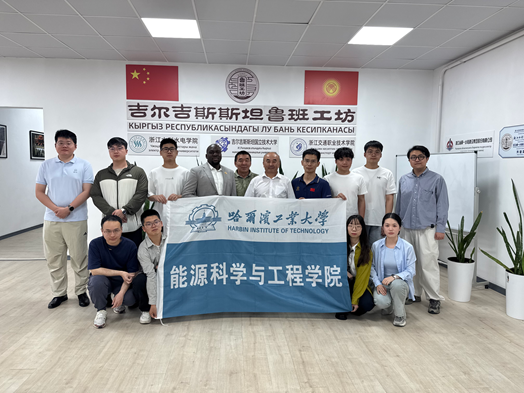
The delegation visits the Razzakov Kyrgyz State Technical University. [Photo/hit.edu.cn]
The delegation visited the Luban Workshop on July 6, where Professor Akylbek Chymyrov, vice-rector for international affairs at KSTU, delivered a welcome speech and introduced the university's leaders, research institution heads, and relevant college leaders attending the conference.
Professor Bachirou, on behalf of HIT's School of Energy Science and Engineering, expressed gratitude for KSTU's warm reception and introduced the development history, disciplinary characteristics, research platforms, and international cooperation of HIT and the school.
KSTU representatives introduced the university's developments in engineering, energy, mining, civil engineering, information technology, robotics, and transportation disciplines, as well as its achievements in international cooperation, dual-degree programs, research platform construction, and modern engineering laboratory construction.
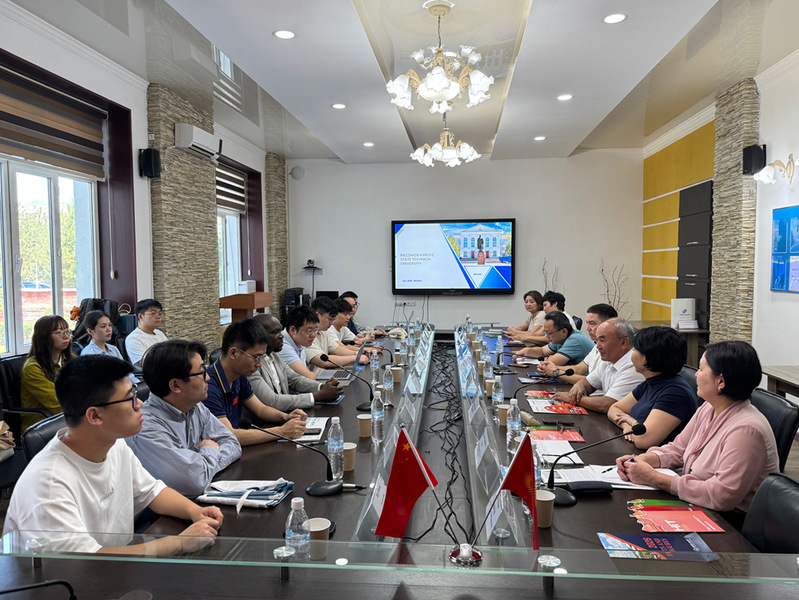 The HIT delegation holds a meeting with leaders of Razzakov Kyrgyz State Technical University. [Photo/hit.edu.cn]
The delegation was then received by Professor Mirlan Chynybaev, rector of KSTU, on July 7, who affirmed the achievements of previous exchanges between the two institutions, expressed strong support for establishing a long-term strategic partnership, and hoped that the two universities would further expand cooperation areas to achieve complementary advantages and common development.
Leaders from the two universities held in-depth discussions on the signing of university-level cooperation agreements, joint student training programs, faculty exchanges, visiting scholar programs, joint research projects, international high-level paper collaborations, and technological innovation cooperation mechanisms.
Both parties agreed to promote the signing of a comprehensive university-level cooperation agreement, deepen joint talent training, expand exchanges among teachers and young scholars, implement joint research projects, facilitate the production of high-level international research results, and establish a long-term and stable research cooperation mechanism.
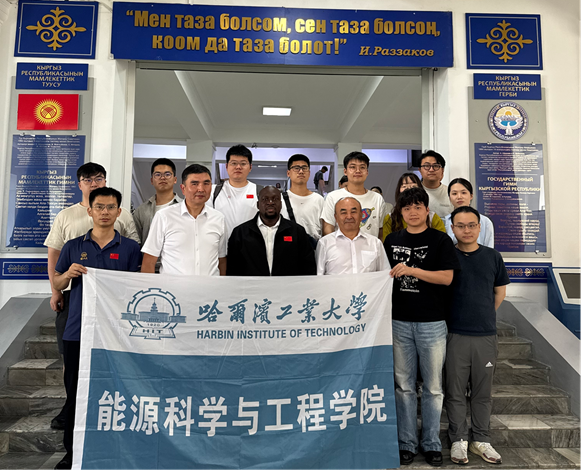
Professor Mirlan Chynybaev, rector of KSTU, poses for a group photo with delegation members. [Photo/hit.edu.cn]
The delegation visited NU from July 8 to 10 for academic exchanges and field research activities, focusing on talent cultivation and international exchange discussions in energy storage technology, hydrogen production and utilization, and carbon capture, utilization, and storage.
Other focuses include solar thermal and thermochemical conversion, advanced functional materials, the application of AI in energy systems, battery technology, rare earth and key materials, and sustainable manufacturing.
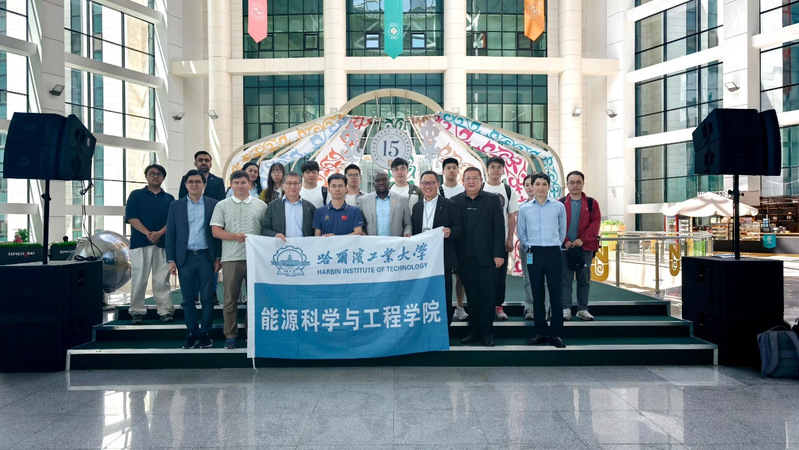 The delegation visits Nazarbayev University.[Photo/hit.edu.cn]
Academic exchanges began on July 9, when Doctor Assel Uvaliyeva, vice-rector of NU, delivered a welcome speech. Academician Zhumabay Bakenov, director-general of the Institute for New Materials and Energy Technology (INMET), then introduced the institute’s development and warmly welcomed the HIT faculty and students.
Professor Bachirou, representing HIT's School of Energy Science and Engineering, introduced the institute's history since 1920 and its achievements in the "Double First-Class" initiative. Uvaliyeva highly praised HIT's achievements in engineering and energy fields and expressed hope for strengthened cooperation in graduate student exchanges, faculty visits, and computer science and AI.
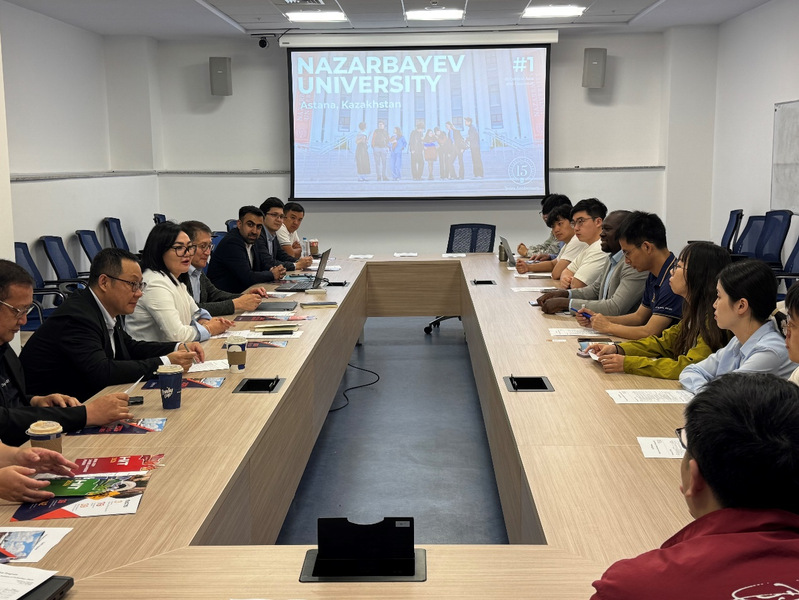 The delegation holds a meeting with representatives from Nazarbayev University. [Photo/hit.edu.cn]
Both sides discussed cooperation models including dual master's and doctoral degree programs, joint supervision and joint thesis research for graduate students, short-term and long-term exchange visits for faculty and students, and exchanges of visiting scholars and postdoctoral fellows. They agreed to apply for bilateral and multilateral international research projects focusing on shared research directions, and to promote the construction of a joint laboratory for energy storage and energy conversion technologies.
The delegation also visited the INMET laboratory and research facilities on the same day. Experts from the university provided a detailed overview of their experience in building the experimental platform and their ongoing research projects in battery technology, advanced materials, and energy conversion systems. Both sides engaged in on-site technical exchanges regarding the operational mechanisms of the experimental devices, platform-sharing mechanisms, and joint experimental design.
The delegation listened to presentations from NU researchers on their research achievements, including layered oxide cathodes for sodium-ion batteries, biomass-derived hard carbon anodes, flexible-gas sensing technology, and prototype equipment for real-time ammonia detection. They exchanged views on issues such as the joint publication of high-level papers and pathways for technology transfer.
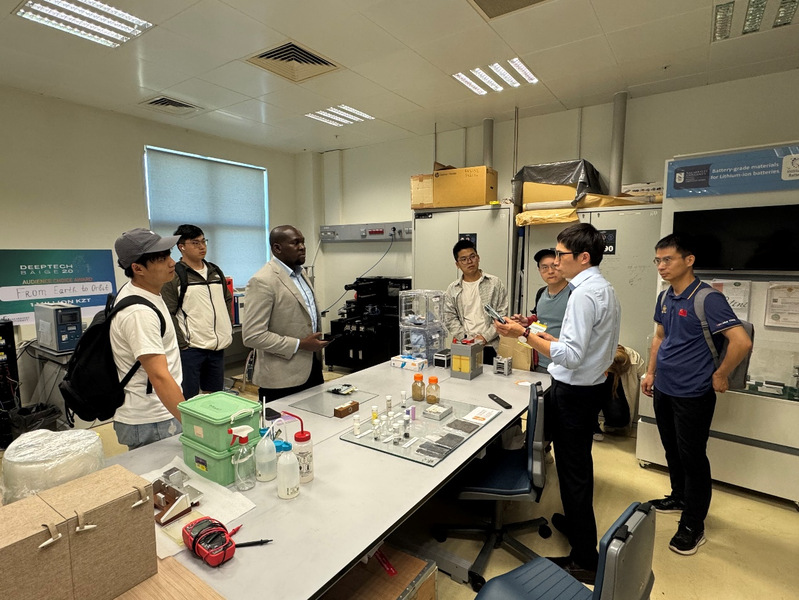 The delegation visits the INMET laboratories and research facilities.[Photo/hit.edu.cn]
These visits further enhanced mutual understanding between HIT and universities in Kyrgyzstan and Kazakhstan, clarified areas of cooperation such as energy science, advanced materials, postgraduate training, faculty and student exchanges, joint research, international project applications, and technology transfer, laying a solid foundation for establishing long-term, stable, and effective inter-university cooperative relationships.