

The inaugural meeting and first general assembly of the Harbin Fusion and Superconductivity Industry Technology Innovation Alliance were held at Harbin Institute of Technology (HIT) on Aug 7.
Wang Xilin, second-level inspector of the Department of Science and Technology of Heilongjiang Province, attended the event. Yang Aiguo, deputy secretary-general of the Harbin municipal people's government, and Liu Ting, vice-president of HIT, attended and delivered speeches.
Representatives from 66 alliance member units, including the Institute of Plasma Physics of the Chinese Academy of Sciences, the Southwestern Institute of Physics of the China National Nuclear Corporation, and Western Superconducting Technologies Co, attended the event.
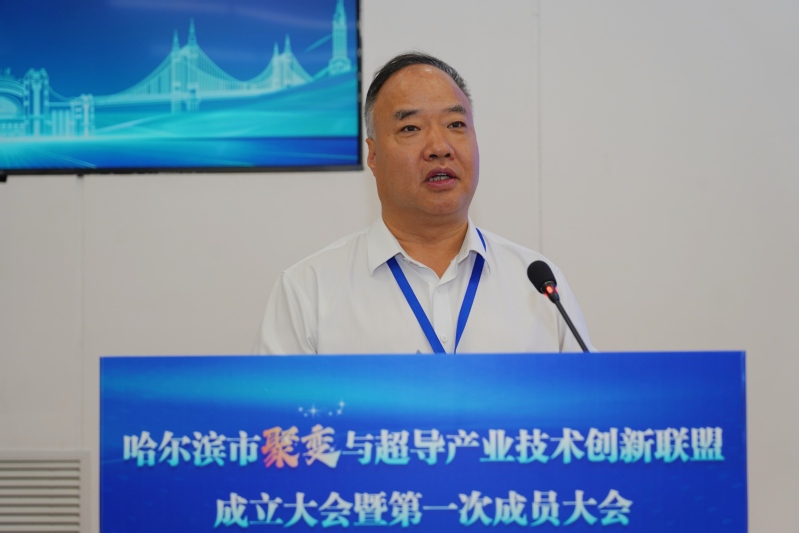
Yang Aiguo delivers a speech. [Photo/hit.edu.cn]
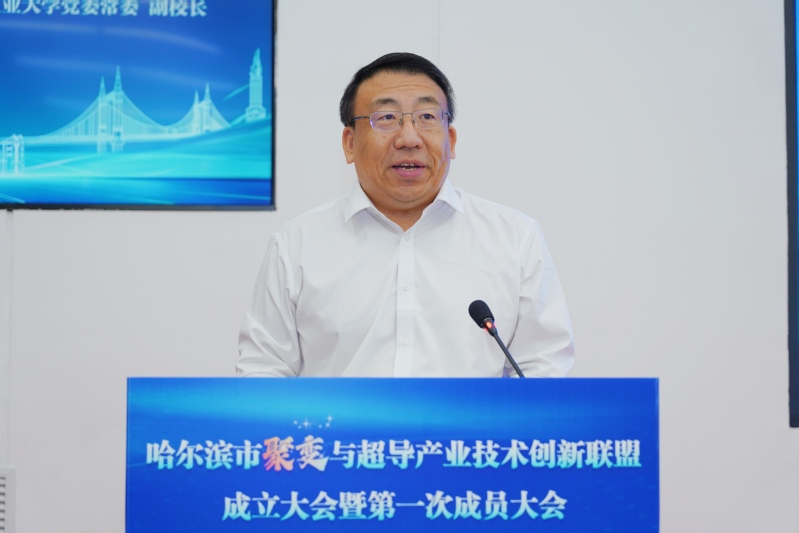
Liu Ting delivers a speech. [Photo/hit.edu.cn]
Under the guidance of the Department of Science and Technology of Heilongjiang Province and the Harbin science and technology bureau, the alliance was jointly initiated by HIT as the lead organization, together with Harbin Engineering University, the Heilongjiang Provincial Institute of Atomic Energy, Harbin Electric Corporation, and other provincial research institutes and major enterprises, as well as top domestic universities, research institutions, and leading enterprises in the fusion and superconductivity fields, including the Institute of Plasma Physics of the Hefei Institutes of Physical Science of the Chinese Academy of Sciences, the Southwestern Institute of Physics of the China National Nuclear Corporation, the University of Science and Technology of China, Huazhong University of Science and Technology, Southwest Jiaotong University, Peking University, and Western Superconducting Technologies Co.
Currently, the first batch of member units has reached 66, initially establishing a full-chain collaborative innovation system covering basic research, technological breakthroughs, equipment manufacturing, and engineering applications.
Meanwhile, the alliance will align with national strategic needs in the fields of controlled nuclear fusion and superconductivity, carry out academic exchanges, supply-demand matchmaking, and talent cultivation, accelerate the commercialization and application of key technological achievements, expand real-world applications in areas such as energy equipment, high-end manufacturing, and new materials, strive to build a regional innovation brand, and provide strong support for fostering new quality productive forces and promoting high-quality regional development.
At the inauguration ceremony, Wang and Liu jointly unveiled the plaque for the Harbin Fusion and Superconductivity Industry Technology Innovation Alliance. Professor Li Liyi, dean of the HIT School of Space Environment and Material Sciences and director of the State Key Laboratory of Space Environment and Material Interactions, accepted the plaque on behalf of the chair unit. Nie Qiuyue, executive vice-dean of the Undergraduate School and a professor at the School of Electrical Engineering, reported on the alliance's preparatory work.
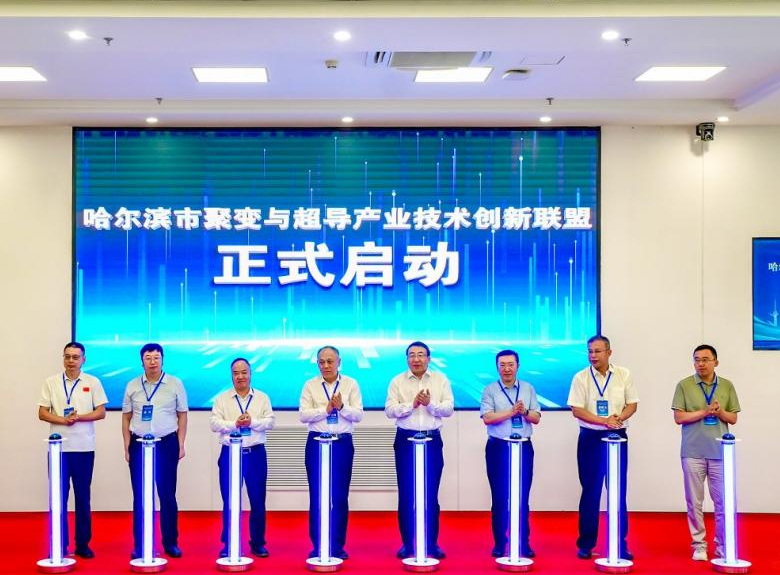
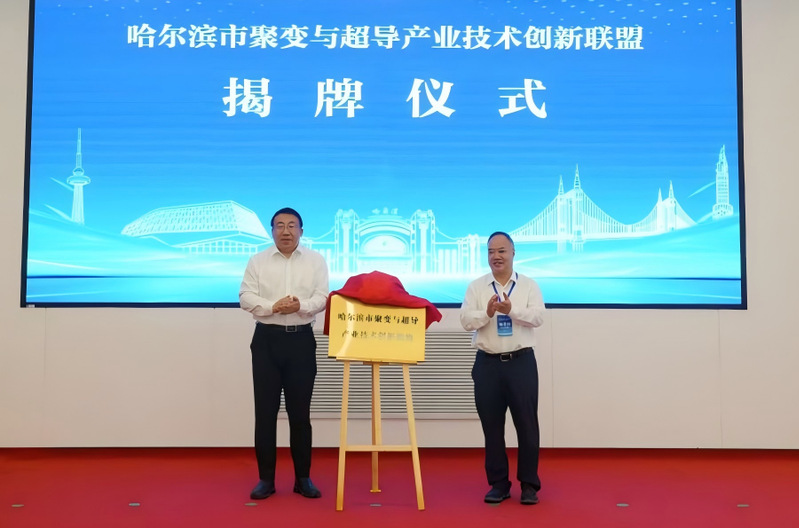
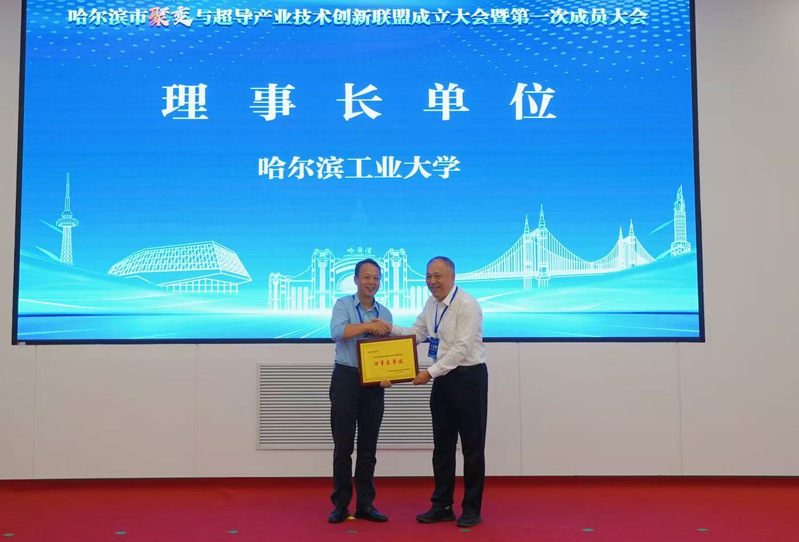
The inauguration ceremony. [Photo/hit.edu.cn]
Experts delivered reports on frontier topics such as the future industrial layout of nuclear fusion, and the R&D and application progress of practical superconducting materials.
During their time on campus, attending experts and alliance member representatives visited and inspected relevant national-level platforms, including the State Key Laboratory of Space Environment and Material Interactions, the State Key Laboratory of Robotics and Systems, the State Key Laboratory of Special Environmental Composite Materials Technology, and the State Key Laboratory of Precision Welding and Joining of Material Structures.
Editor: Yang Wenyu