

The China International College Students' Innovation Competition (2026) Brazil Regional Competition was held at Sao Paulo State University (Unesp).
The event was jointly sponsored by China's Ministry of Education along with 11 other ministries and commissions. It was hosted by Harbin Institute of Technology (HIT), and co-organized by HIT's Zhengzhou Advanced Research Institute and Unesp.
Over 400 innovation teams and more than 1,000 faculty members and students from dozens of renowned universities across South America – including Unesp, the University of Campinas, and the University of Buenos Aires – participated in the competition.
Following qualification review and online evaluation, 47 teams advanced to the regional finals. After team roadshow presentations and on-site expert reviews, the competition awarded nine gold, 14 silver, and 24 bronze prizes.
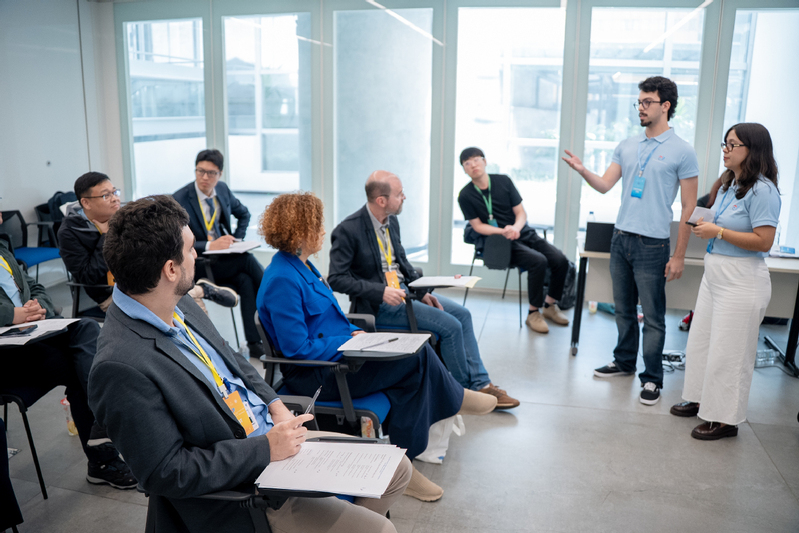
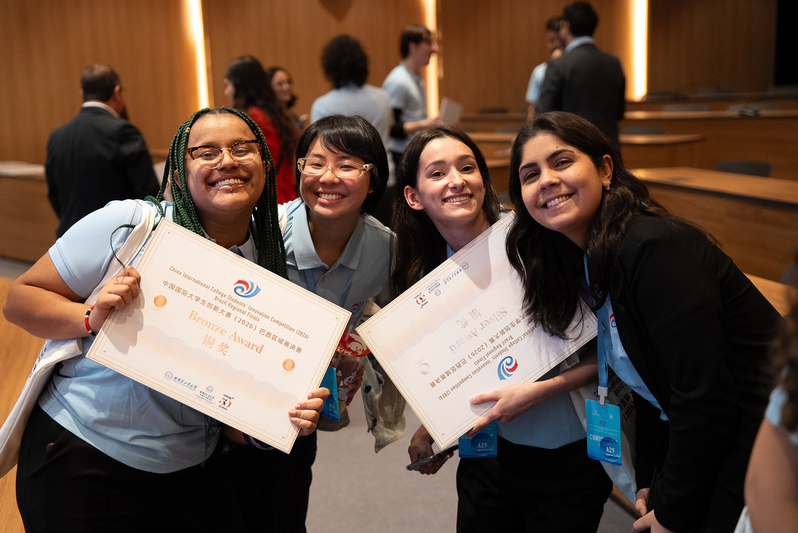
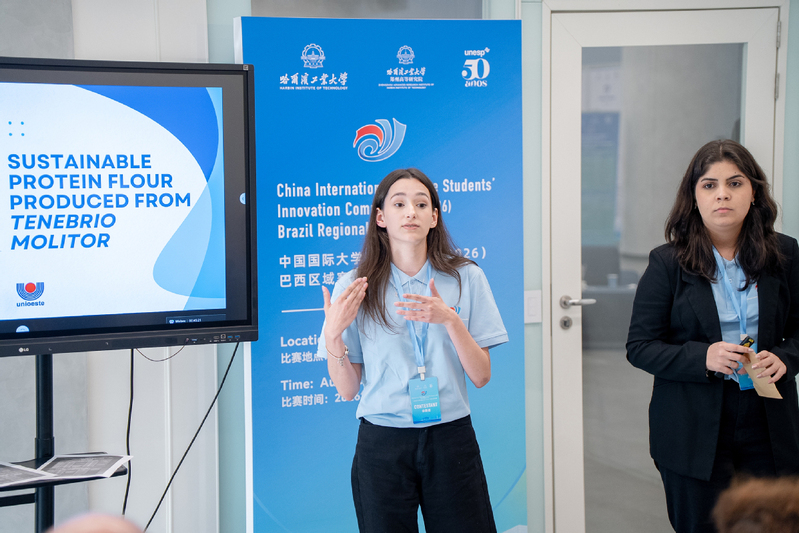 The final scene. [Photo/hit.edu.cn]
At the finals, competing teams highlighted South American industrial upgrading and cutting-edge technology applications, showcasing projects spanning agricultural technology, green energy, digital healthcare, and artificial intelligence.
During the competition, the South American Youth Innovation Achievement Exhibition and the Exhibition of Henan Intangible Cultural Heritage (ICH) of China were held concurrently. The Henan ICH Exhibition, rooted in rich traditional Chinese culture, displayed China's ICH crafts and distinctive folk culture, telling Chinese stories and promoting Chinese culture to Latin American youth.
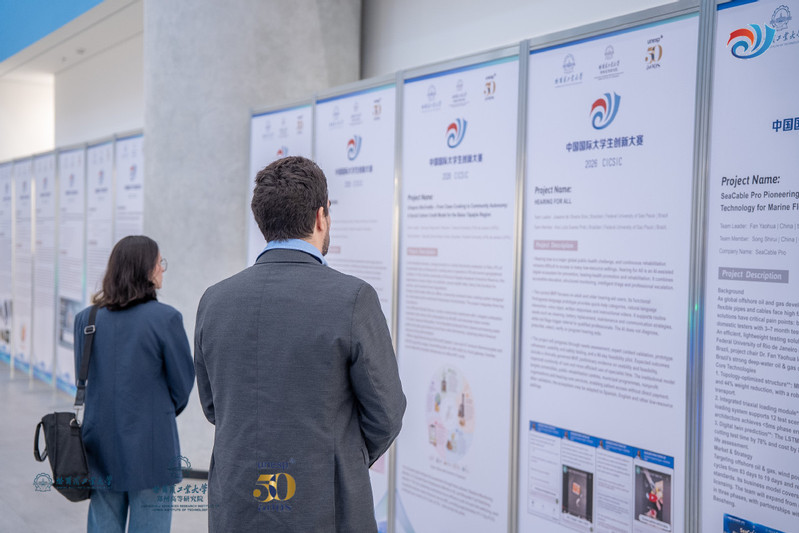
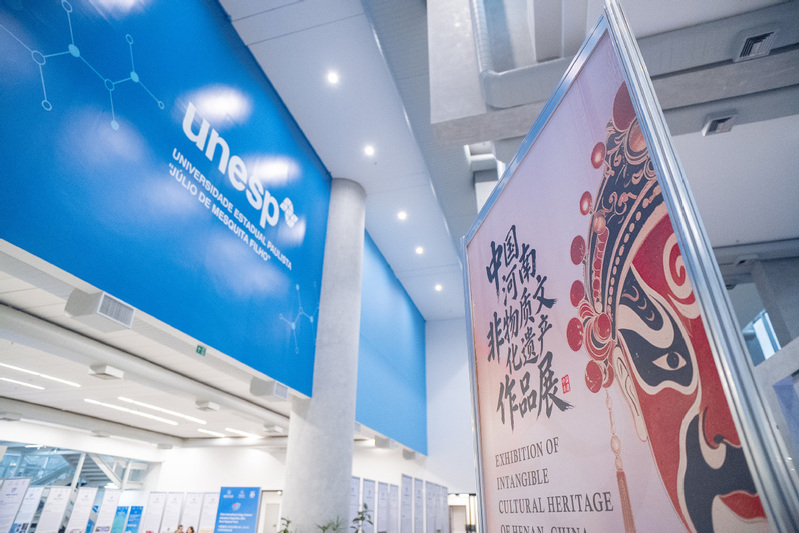
Visitors enjoy the exhibition. [Photo/hit.edu.cn]
The China International College Students' Innovation Competition adheres to the overarching goals of being more Chinese, more international, more educational, more comprehensive, more innovative, and more collaborative. It works to expand regional competitions abroad, enhance international exchanges and cooperation in innovation education, and establish a global platform for university students' innovation education exchange and collaboration.
This Brazil Regional Competition filled the gap in competitions in South America, further optimizing its global layout.
Editor: Yang Wenyu