

HIT Media (Text: Liang Yingshuang; Photos: Yan Mo)
The unveiling ceremony of the Harbin Base of the Sino-Russian Mathematics Center was recently held at Harbin Institute of Technology (HIT), alongside the Harbin-Saint Petersburg Mathematics Forum.
Zhang Jiping, an academician of the Chinese Academy of Sciences and director of the Sino-Russian Mathematics Center, and Liu Hong, vice-president of HIT, delivered speeches at the ceremony and jointly unveiled the Harbin Base.
Additional addresses were given by two representatives of collaborating institutions: Sergey Kislyakov, an academician of the Russian Academy of Sciences and director of the Euler International Mathematical Institute, speaking on behalf of the Russian partner institution; and Fan Zhaobing, dean of the College of Mathematical Sciences at Harbin Engineering University, speaking on behalf of the local co-construction partners.
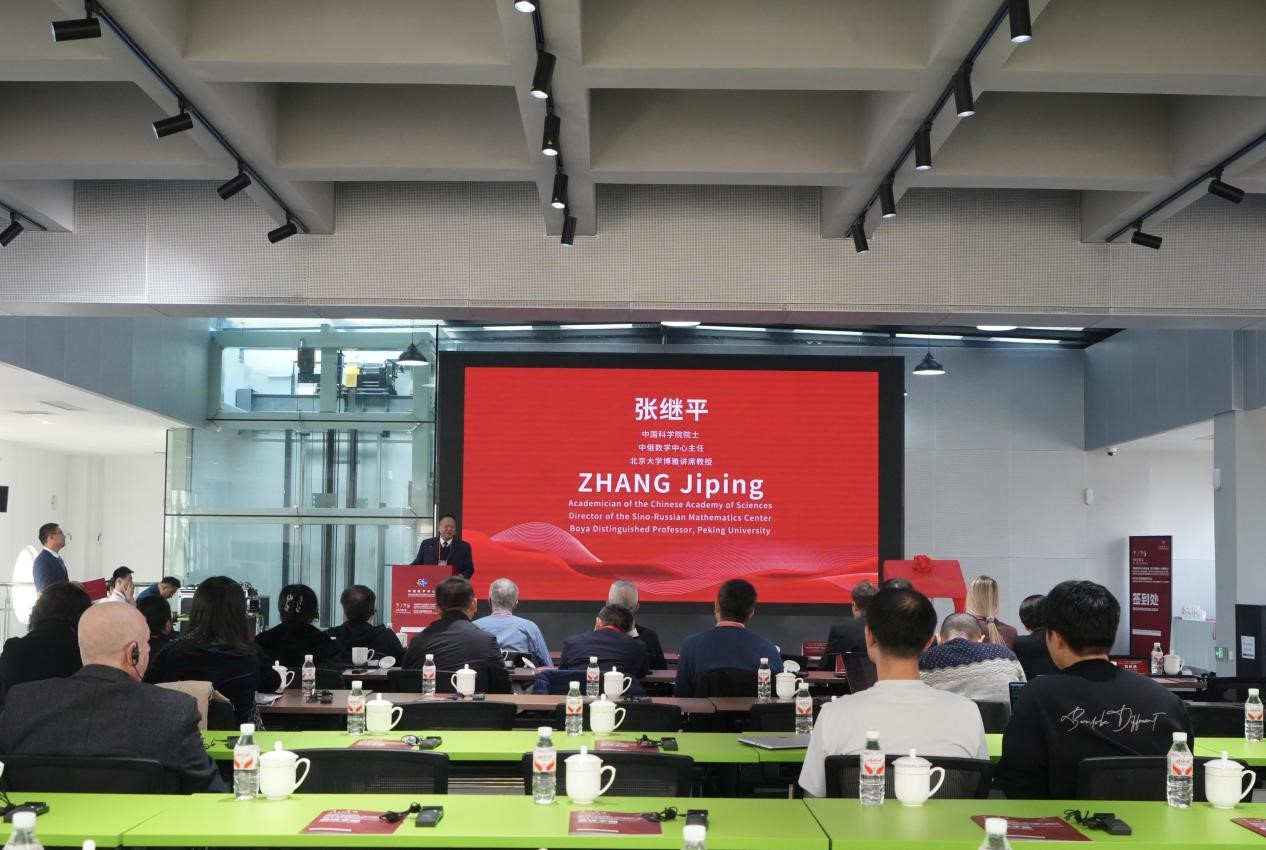
The unveiling ceremony takes place. [Photo/hit.edu.cn]
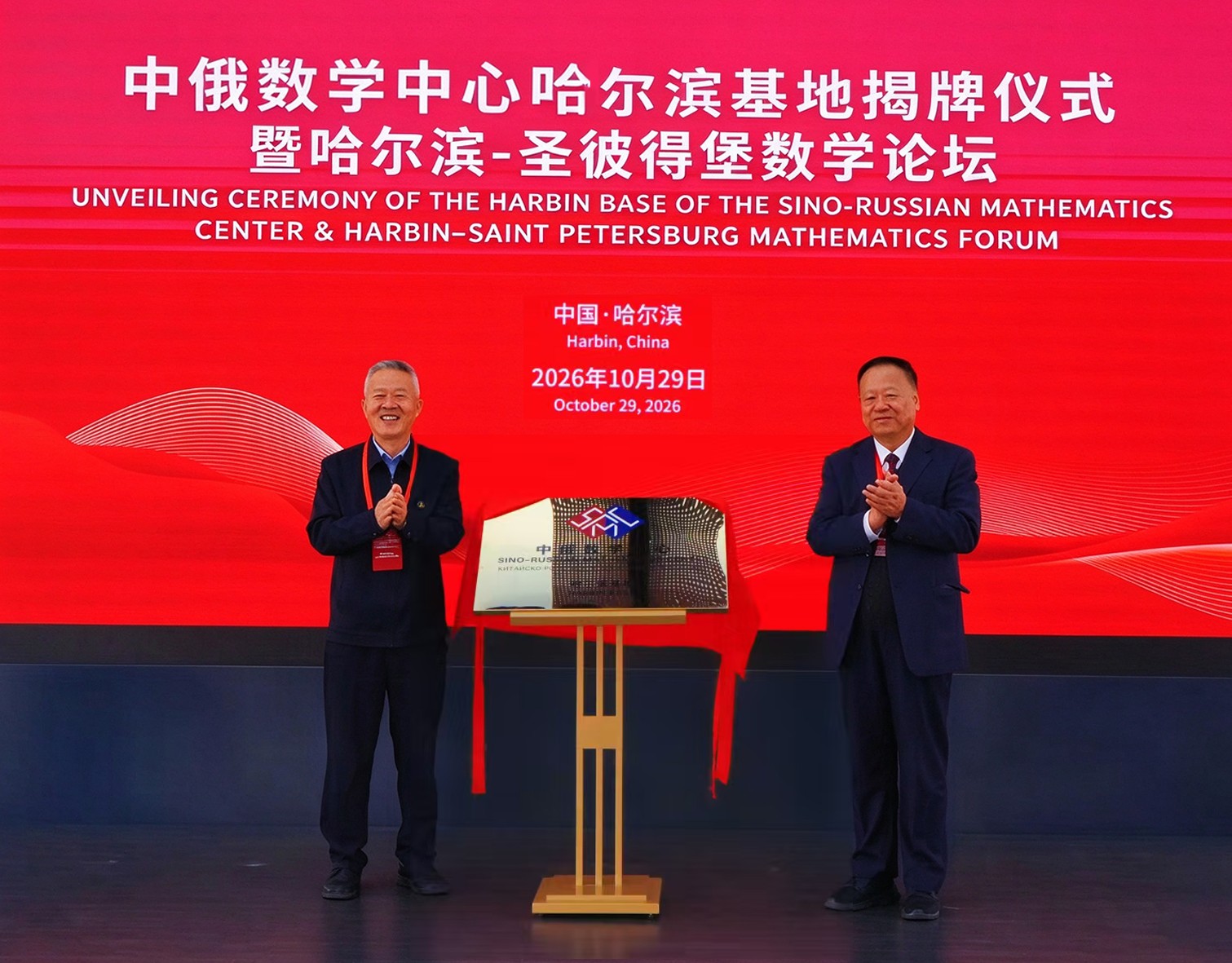
Zhang Jiping and Liu Hong unveil the Harbin Base of the Sino-Russian Mathematics Center.[Photo/hit.edu.cn]
Director Zhang said the unveiling would give a major boost to exchanges and cooperation in mathematics between China and Russia, and that the Sino-Russian Mathematics Center would lend strong support to the Harbin Base. He also said he hoped the base would deepen collaboration in building an international academic team, pursuing high-level joint research, and jointly training top talent. He said the base could become a hub for mathematical research and collaboration between China and Russia, contributing to advances in both theoretical and applied mathematics.
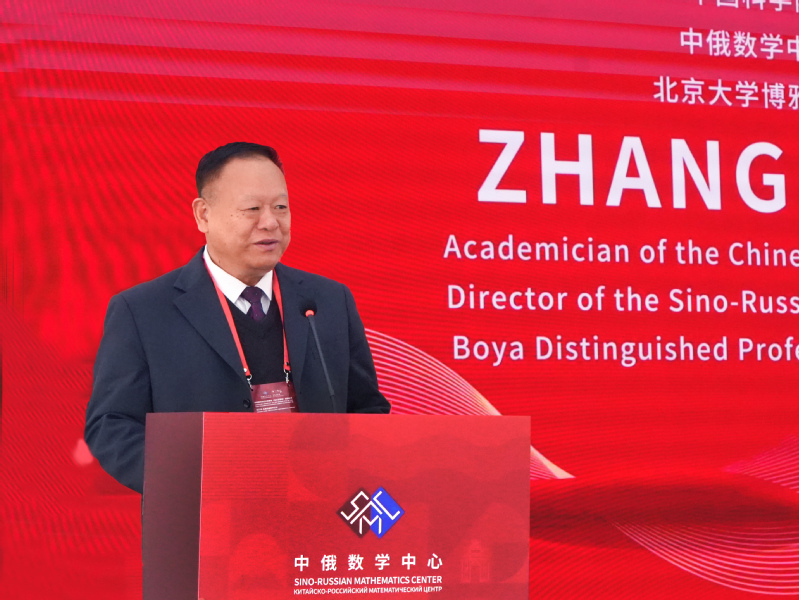
Zhang Jiping delivers a speech. [Photo/hit.edu.cn]
Liu believed that the base would give HIT a solid foundation to deepen Sino-Russian cooperation in mathematics and bring together top academic resources. The university, he added, would actively coordinate efforts and provide full support for the base's development. He hoped that, working with its partner institutions, HIT could build the base into a dedicated academic platform – one that would let mathematicians and other scholars concentrate on research and professional growth. HIT also plans to promote interdisciplinary research linking mathematics with fields such as artificial intelligence. Together, he said, these efforts would help deepen the China-Russia comprehensive strategic partnership of coordination for a new era.
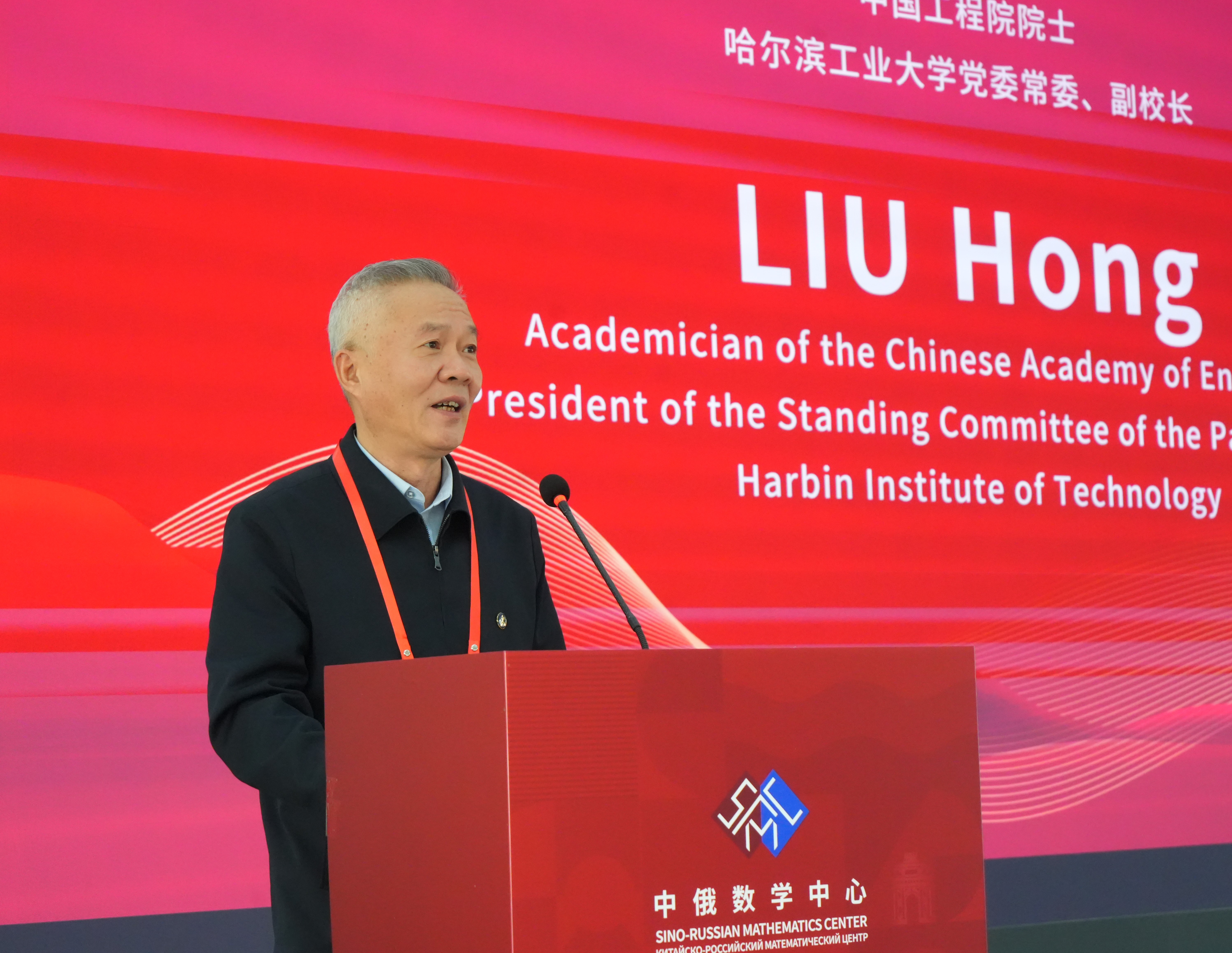
Liu Hong delivers a speech.[Photo/hit.edu.cn]
Kislyakov highlighted HIT's strong foundation in educational cooperation with Russia and said that the Euler International Mathematical Institute will actively participate in the base's development. The institute is committed to promoting the establishment of a regular exchange and visit mechanism for mathematical experts and scholars from both sides.
Kislyakov expressed hope that the base would consolidate bilateral academic ties and yield more high-level research achievements. Such outcomes will further strengthen educational cooperation between China and Russia.
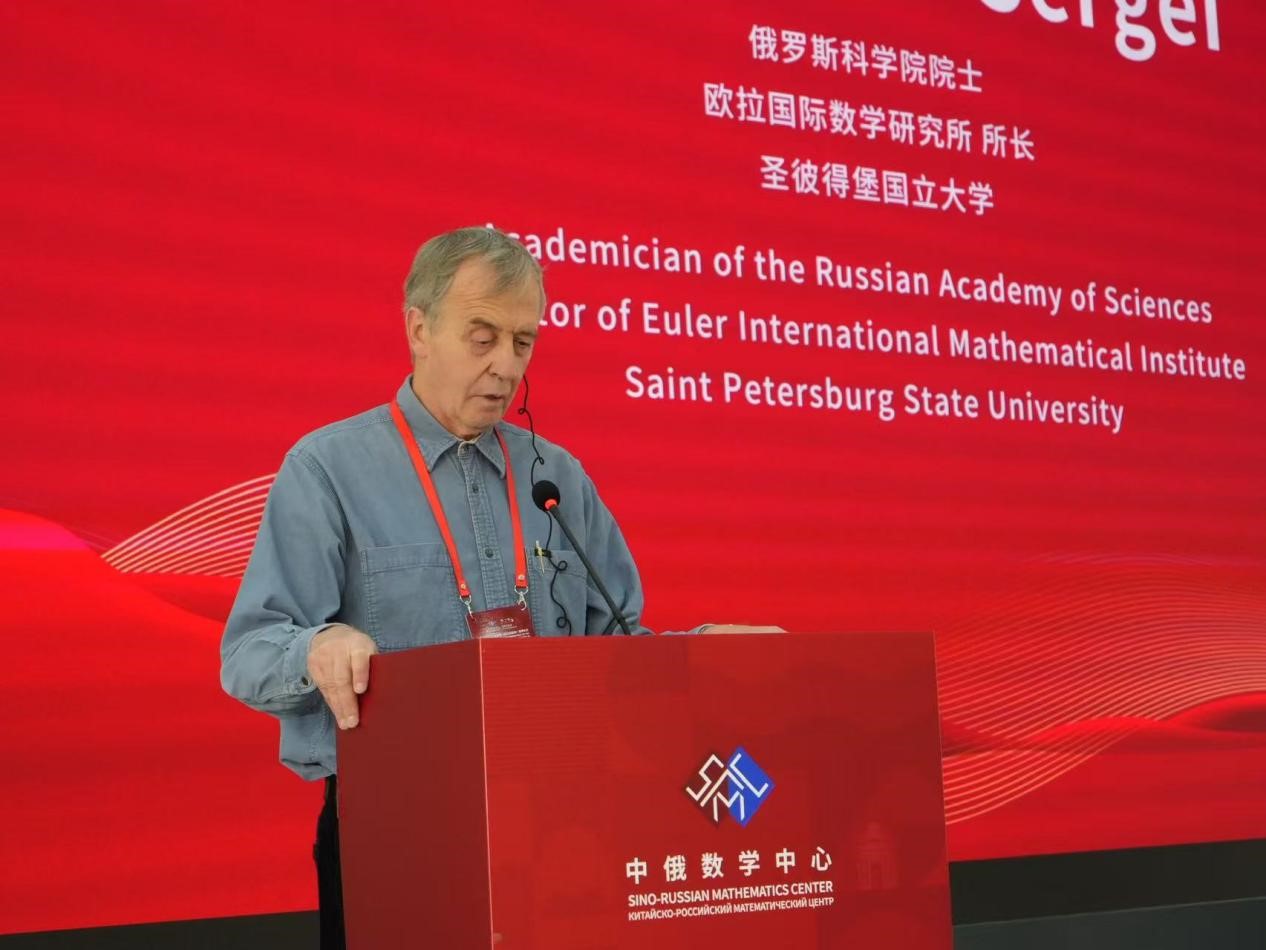
Sergey Kislyakov delivers a speech. [Photo/hit.edu.cn]
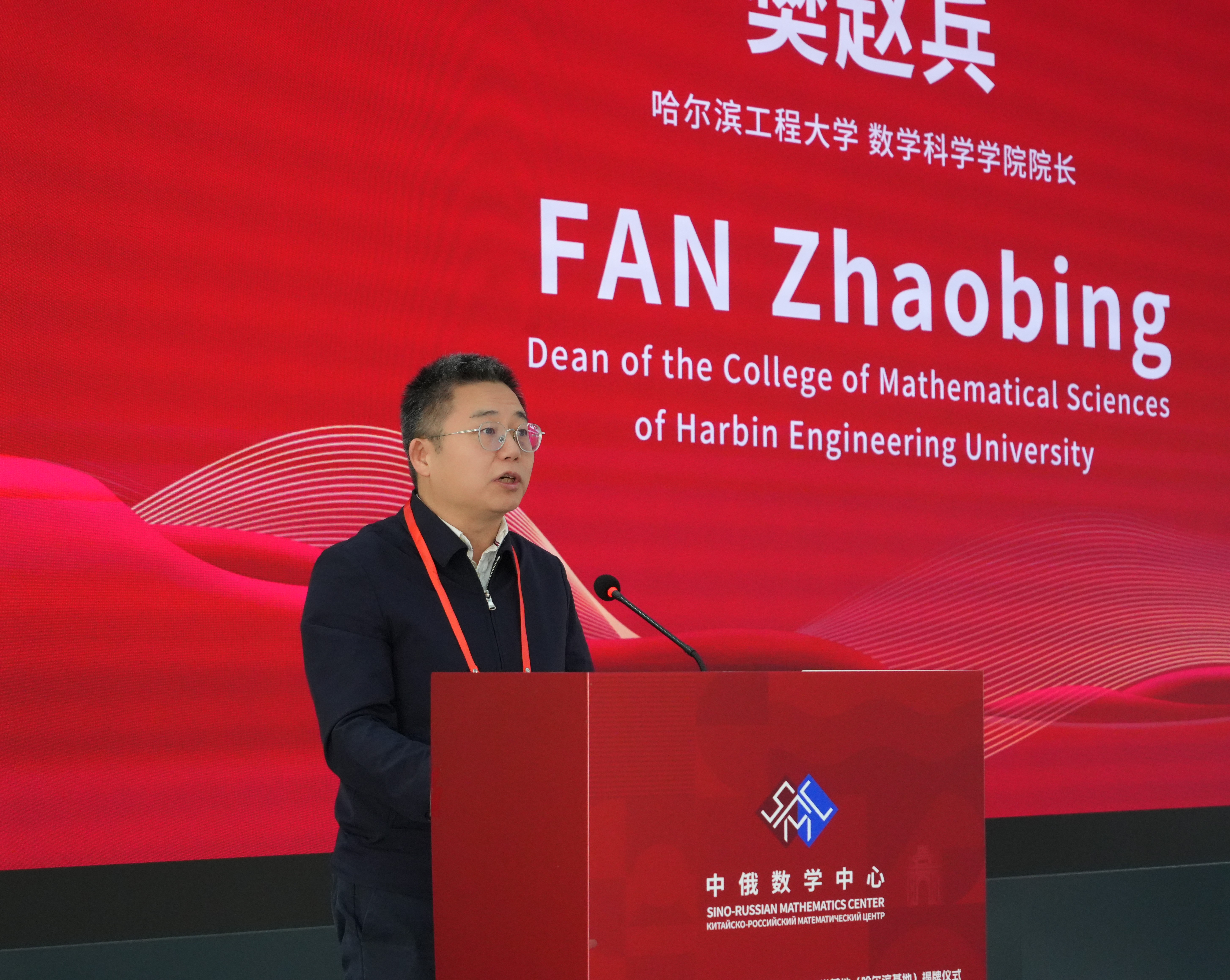
Fan Zhaobing delivers a speech. [Photo/hit.edu.cn]
Following the unveiling ceremony, the Harbin-Saint Petersburg Mathematics Forum commenced. Chinese and international mathematical experts and scholars engaged in two days of in-depth discussions. These discussions covered recent advances in fundamental mathematics, such as modern analysis and algebraic geometry, as well as their applications in mathematical physics and machine learning. Participants also shared the latest research progress in fields including non-commutative analysis and nonlinear partial differential equations.
The Sino-Russian Mathematics Center was established under the strategic guidance of the leaders of China and Russia. It is jointly led by Peking University and Lomonosov Moscow State University, and dedicated to enhancing the level of mathematical research and the quality of talent cultivation in both countries. The Harbin Base, spearheaded by the Academy of Mathematics and Interdisciplinary Sciences at HIT, will leverage Harbin's geographical advantages to further promote exchanges and cooperation among mathematical experts and scholars from China and Russia.
Edited by Shang Yankai
Reviewed by Song Ling, Li Shoubin, and Yang Wenyu