

The final round of the First AI Innovation Competition, hosted by Harbin Institute of Technology (HIT), was held on July 11.
Zhao Tingyi, senior solutions architect at Beijing Volcano Engine Technology Co, and Yue Huimin, a member of HIT's Party Committee Standing Committee, executive deputy director of HIT's Publicity Department, and director of HIT's Faculty Affairs Department, attended the opening ceremony and delivered speeches.
At the final round, three first prizes, five second prizes, seven third prizes, and 10 Most Popular Awards were selected on-site.
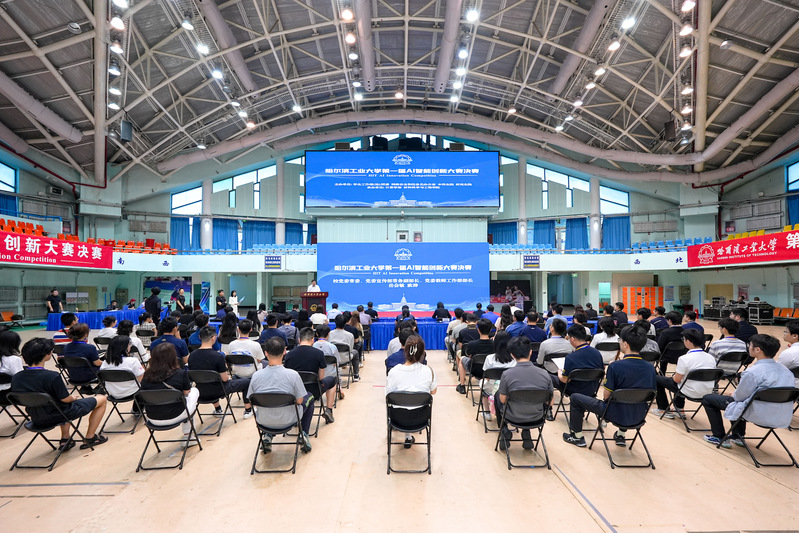
The final round takes place. [Photo/hit.edu.cn]
Zhao stated that the competition fully reflects HIT's forward-looking exploration in talent cultivation models for the intelligent era. He encouraged participants to articulate the problems their works address and their value, ensure the stability and usability of their works with smooth user experiences, and cherish every attempt and iteration to lay a solid foundation for future in-depth engagement in the AI field.
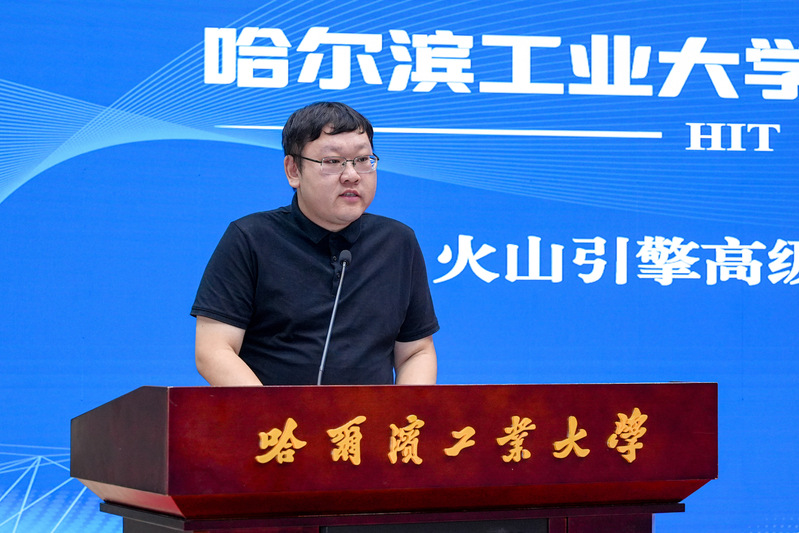 Zhao Tingyi delivers a speech. [Photo/hit.edu.cn]
Yue stated that this competition is an important measure for the university to anchor its mission of achieving self-reliance and strength in science and technology and to lay out new tracks in artificial intelligence. It is also a vital platform for gathering young scientific and innovation forces and cultivating top scientific and innovation talents for the intelligent era.
Taking this competition as an opportunity, the university will further deepen "AI+" interdisciplinary integration, focus on "AI+" education paradigms, deliver tangible "AI+" industry empowerment, build a solid foundation for collaborative innovation, forge top scientific and innovation talents for the intelligent era, and shoulder the mission of serving national strategies.
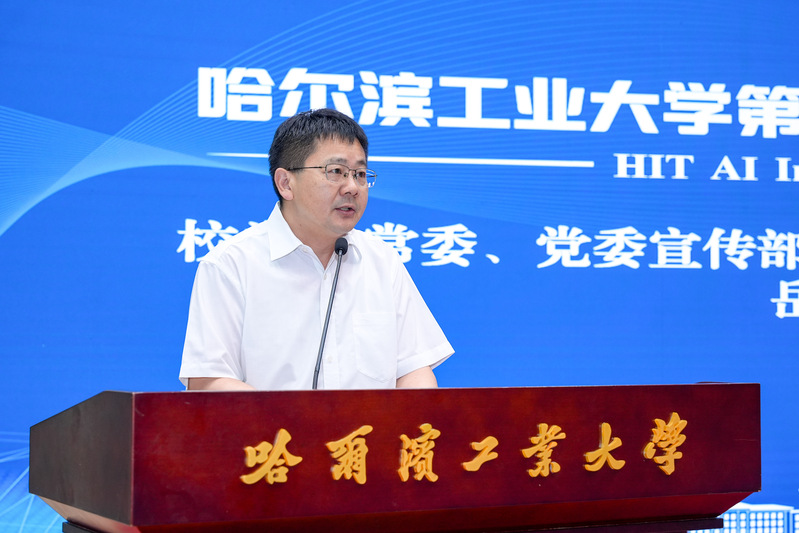 Yue Huimin delivers a speech. [Photo/hit.edu.cn]
The competition appointed experts from key AI enterprises and the university as members of the expert review committee. At the opening ceremony, Yue and Lei Yinglong, director of the Education Industry Business at Volcano Engine Co, jointly presented appointment letters to the members of the expert review committee.
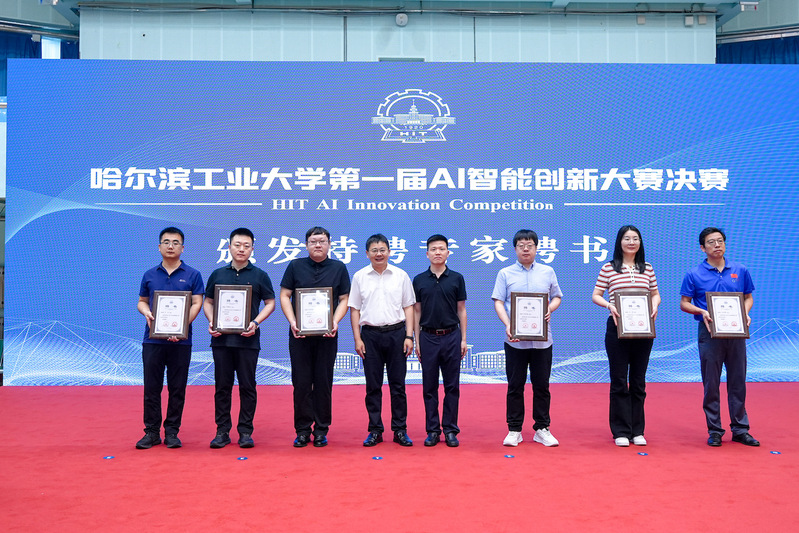
Yue Huimin and Lei Yinglong present appointment letters to the members of the expert review committee. [Photo/hit.edu.cn]
The competition featured an open roadshow session, where the roadshow area was open to judges and all faculty and students. Faculty and students could independently experience the actual usage effects of the entries, while judges on-site tested the usage of each intelligent agent one by one.
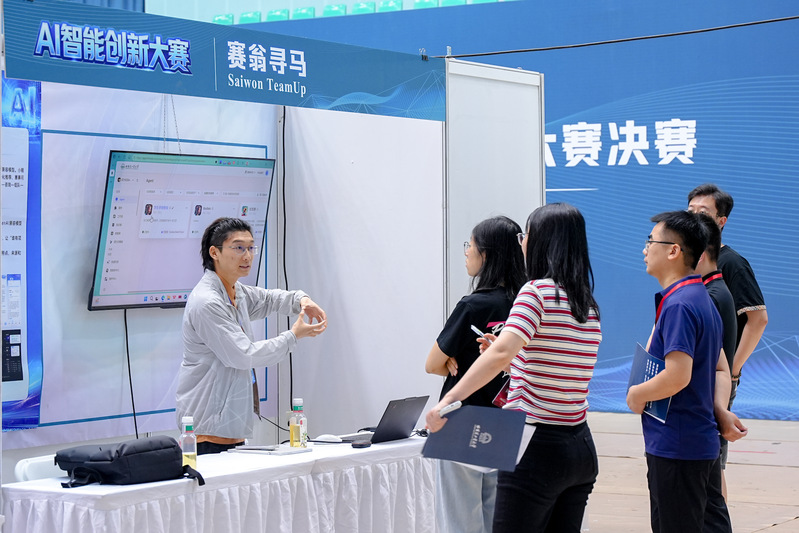
The competition features an open roadshow session. [Photo/hit.edu.cn]
In the closed defense session, each team conducted a three-minute presentation on their work's creativity, technical implementation, and application value, and answered questions from the review experts.
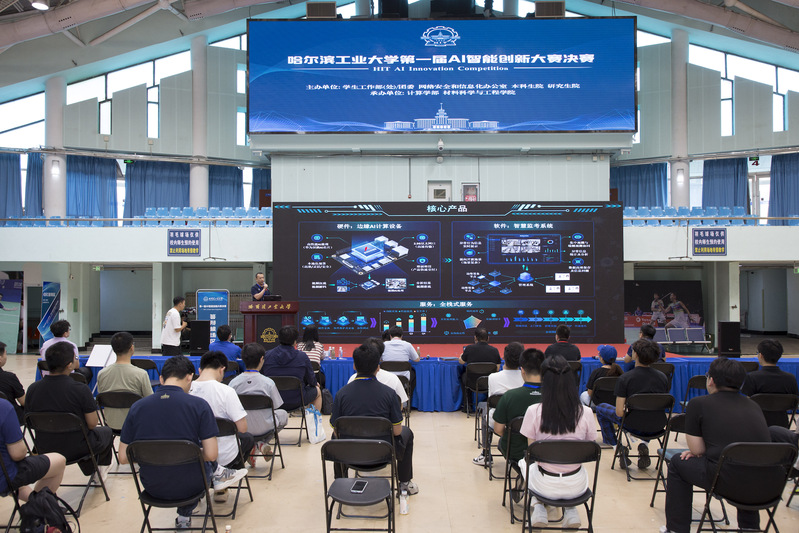 The closed defense session. [Photo/hit.edu.cn]
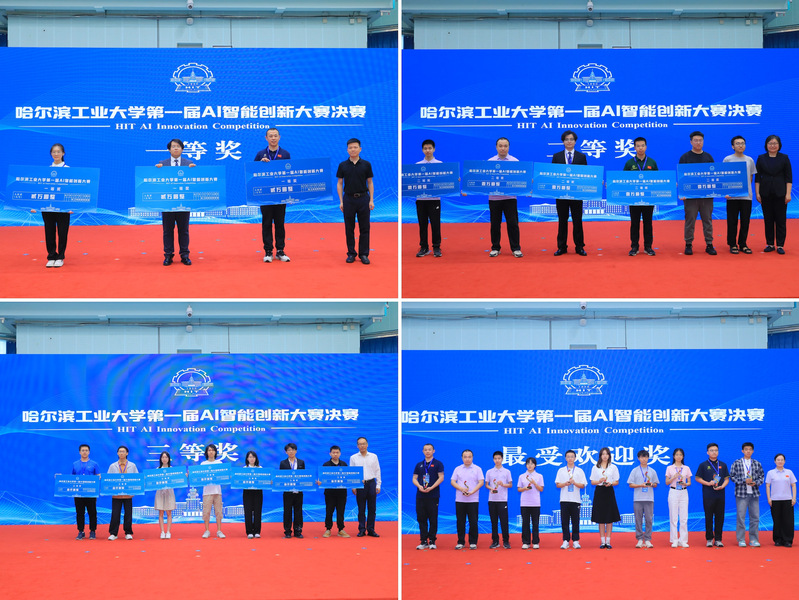 The award ceremony takes place. [Photo/hit.edu.cn]
The competition was launched in January this year. A total of 585 teams comprising undergraduate, master's, and doctoral students from the three campuses (Harbin, Weihai, and Shenzhen campuses) registered to participate. Faculty and students from more than 20 universities across the country actively joined as team members. After six months of training, refinement, and review, the competition selected 32 teams to advance to the final round, including 18 from the main campus, four from the Weihai campus, and 10 from the Shenzhen campus.
The competition provided participating teams with free access to the university's AI development platform and domestic large model computing resources. During the preparation period, eight specialized technical training sessions led by domain experts were conducted, with a cumulative attendance of over 2,000 participants, building a full-chain AI innovation practice platform. Entries were divided into three tracks: Campus Creativity, Learning and Research, and Faculty Teaching. The award-winning projects will be deployed on the campus AI service platform for use by all faculty and students.
Editor: Yang Wenyu