

The kickoff meeting for the Chinese Academy of Engineering (CAE)'s 2026 major strategic consulting project, "Research on Scaled Implementation Pathways for Artificial Intelligence (AI) Industrial Agents", was held at Harbin Institute of Technology (HIT)'s international campus on Sept 4.
Xu Qin, secretary of the CPC Heilongjiang Provincial Committee, met with participating academicians, experts, and relevant personnel. Cong Li, vice-governor of Heilongjiang, and Chen Su, Party secretary and director of the Heilongjiang Provincial Department of Science and Technology, attended the meeting.
Academician Chen Zuoning, chief engineer of the National Research Center for Parallel Computer Engineering and Technology, served as head of the project review expert group.
Numerous academicians and experts from CAE also attended the meeting, which was chaired by Wu Ligang, assistant to the president of HIT.
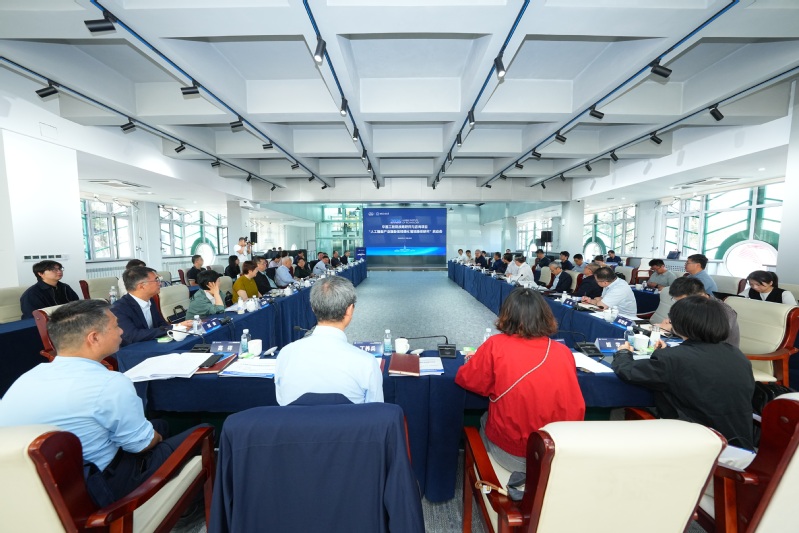
The kickoff meeting for CAE's 2026 major strategic consulting project takes place. [Photo/hit.edu.cn]
At the kickoff meeting, HIT Academician Chen Jie, vice-president of CAE and project leader, said the project aims to review the development trends and key characteristics of industrial agents, build a safety risk governance framework for scaled application, and propose implementation pathways and policy recommendations for the scaled development of industrial agents, so as to provide strategic support for the safe, orderly, and high-quality development of China's AI industrial agent sector.
Project members said they would revise and improve the research framework and implementation pathways in light of the expert panel’s comments and suggestions, and hoped academicians and experts would continue to provide guidance during implementation so that the project can achieve its expected outcomes.
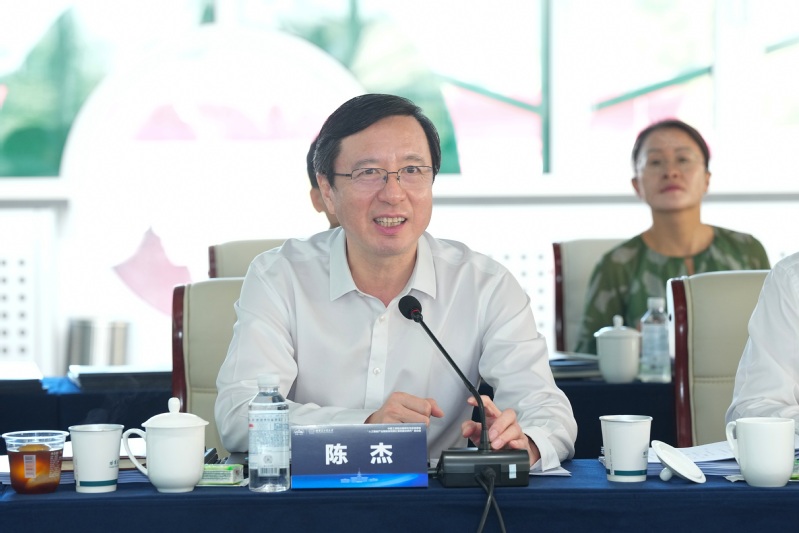 Chen Jie delivers a summary speech.[Photo/hit.edu.cn]
Han Jiecai, president of HIT and the project's lead institution, said the project conducts systematic strategic research centered on the core theme of AI industrial agents. He expressed hope that review experts would offer valuable advice based on their research fields and industrial practice to support deeper project research. As the lead institution, HIT will work with participating units to advance all tasks to a high standard and support the development of the AI industry with high-level research outcomes.
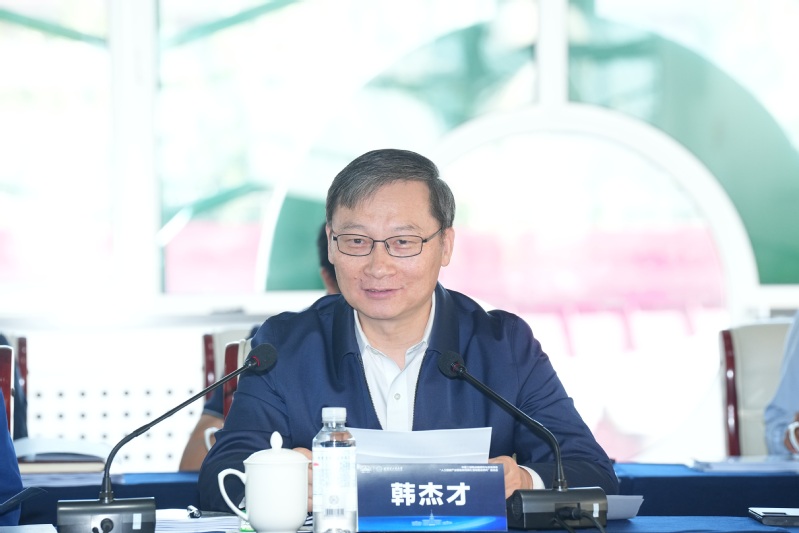 Han Jiecai delivers an address.[Photo/hit.edu.cn]
Participating academicians and experts discussed the project's significance and application scenarios, and offered suggestions to keep the research aligned with industry development and ensure its outcomes better serve national strategies, drawing on their respective fields and industrial practice.
The project is led by HIT, with participation from Tongji University, Beijing Institute of Technology, East China University of Science and Technology, Zhejiang University, the Strategic Consulting Center of CAE, Pujiang Laboratory, China Telecom, Huawei, and other units.
Relying on national laboratories, state key laboratories, national engineering laboratories, the National Comprehensive Experimental Base for Intelligent Social Governance, the Shanghai Collaborative Innovation Center for AI Social Governance, and other platforms, the project has assembled an interdisciplinary team with five academicians as sub-project leaders and eight academicians as project advisers. It focuses on concepts, scenarios, risks, and policy adaptation as industrial agents evolve from single-point applications to scaled implementation.
During the meeting, participating academicians and experts visited the Space Environment Simulation Research Infrastructure for inspection and research.
Editor: Yang Wenyu