

An Shi, Party secretary of Central South University, led a delegation to Harbin Institute of Technology (HIT) on Sept 7.
Han Jiecai, president of HIT, held a symposium with An's delegation on medical-engineering interdisciplinary cooperation. Sun Xue, executive deputy Party secretary of HIT, chaired the symposium. Chen Xiang, executive vice-president of Central South University; Liu Jian, vice-president of HIT;and Gao Haibo, assistant to HIT's president, attended related activities.
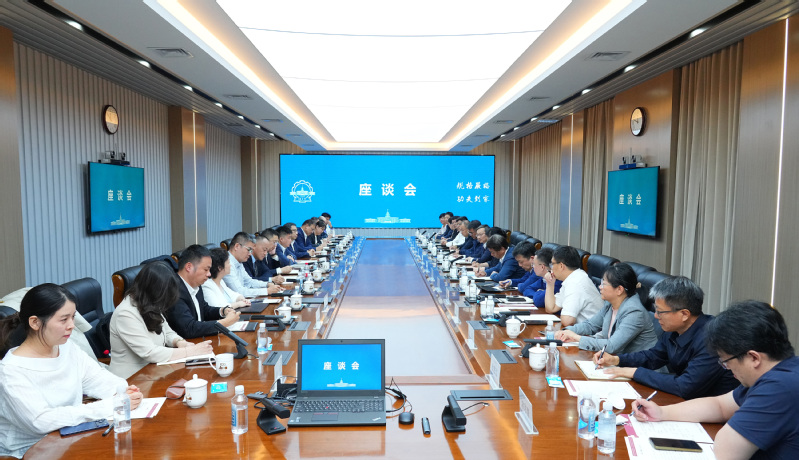 The symposium takes place. [Photo/hit.edu.cn]
An expressed the hope that this exchange would serve as a new starting point for exploring a mechanism for regular and pragmatic cooperation, calling for strengthening complementary advantages and deepening collaborative innovation in fields such as smart healthcare, medical equipment, medical materials, and brain-computer interfaces; cultivating innovative interdisciplinary talent in medicine and engineering; and building platforms for medical-engineering integration.
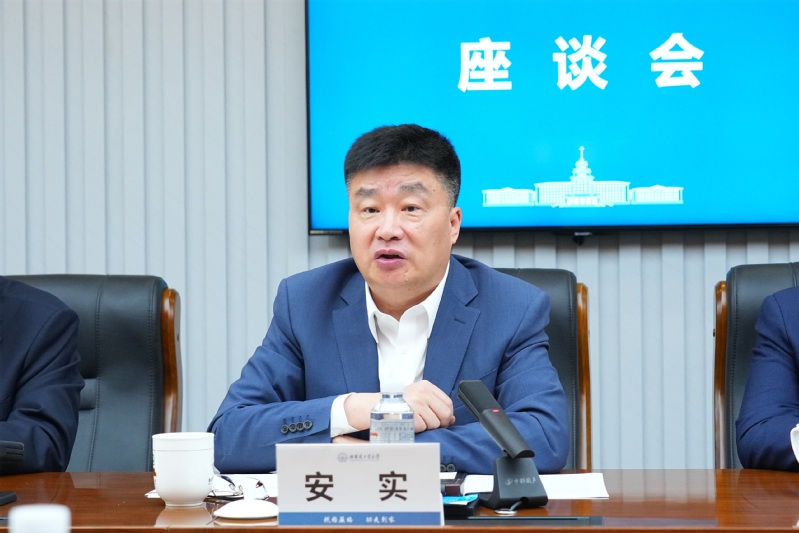 An Shi delivers an address. [Photo/hit.edu.cn]
Han noted that the two universities have complementary disciplinary strengths, aligned research directions, and broad prospects for cooperation. He hoped both sides would use medical-engineering integration as a driving force, focus on clinical needs to identify major scientific problems, collaborate to tackle core technologies, and build an innovation chain from basic research to clinical application, thereby accelerating the translation and application of medical-engineering achievements.
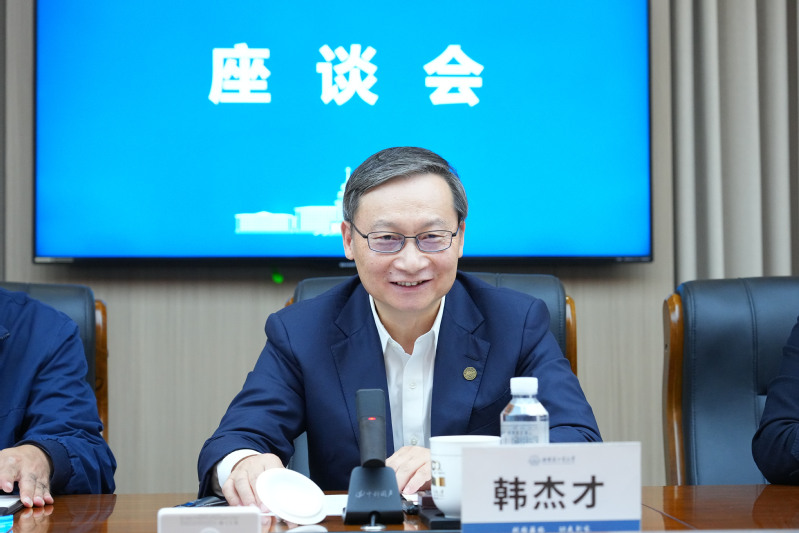 Han Jiecai delivers an address. [Photo/hit.edu.cn]
Chen and Gao introduced their universities' talent teams, disciplinary development, research achievements, and interdisciplinary medical-engineering work. The two sides exchanged views on talent cultivation, research cooperation, platform co-construction, and mechanism innovation.
The Central South University delegation also toured the HIT Museum, the State Key Laboratory of Robotics and Systems, and laboratories of the Faculty of Life Sciences and Medicine, where they learned about the development of HIT's research platforms and breakthroughs in core technologies for medical-engineering integration and discussed cooperation needs with relevant units.
Editor: Yang Wenyu